
By Ashburn Resto · October 28, 2026
For the full process, see our hardwood floor water damage page. Appliance and shared-wall leaks, covered on the Herndon page, are a common cause.
Flat versus cupped
What cupping is
Cupping is when the edges of a board rise higher than the center, so the board looks like a shallow dish. It happens because wood swells as it takes on moisture. If the bottom of the board takes on more water than the top, the bottom swells more and the edges lift.
It is a moisture problem, not a defect in the wood. Flooring that is installed on a damp subfloor, or exposed to a leak from below, will cup.
Why it shows up days later
Wood absorbs water slowly. A spill that sits for an hour may do little, but a leak under a floor can sit for days and keep adding water. The swelling builds gradually, and the cupping becomes visible after the damage is done.
That delay is why people wait and watch. Waiting is the problem, since the first days are when drying can help the most.
Where the water comes from
A dishwasher or ice maker line leaks under the flooring. A water heater or washer releases water that spreads under a floor. A damp crawlspace or slab pushes moisture up from below. In a finished basement, concrete under an engineered floor can release moisture for weeks after a flood.
The fix depends on the source. A leak has to be stopped before the floor can dry.
Can it flatten again
Often, yes, if the moisture is removed slowly and evenly. Boards that dry over a week or two may relax and flatten on their own. Floors that stay wet for a long time may stay cupped, and floors dried too fast may split.
After drying, a flooring contractor can sand and refinish a floor that has flattened. If a floor stays cupped after it reads dry, sanding may flatten it, but only if enough wear layer is left.
What to do now
Find and stop the source. Wipe standing water and lift anything on the floor. Do not cover the floor with a rug or plastic, and do not blast it with heat. Call a restoration crew to meter the boards and the subfloor and set up drying.
Photograph the floor now and again every few days. The photos show how the damage developed, which is useful for a claim.
How drying a wood floor works
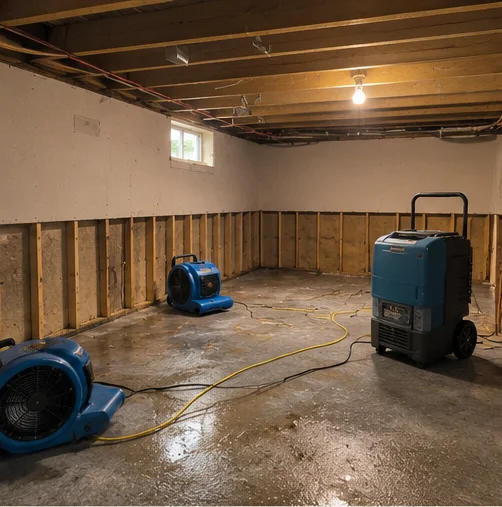
We lay drying mats over the boards and connect them to equipment that pulls moisture from the wood. Air movers and dehumidifiers run in the room. We check the boards and the subfloor with a meter each day and adjust the setup.
The goal is a slow, even release of moisture. Boards dry from the top fast and the bottom slow, and the equipment helps even that out.
What to avoid
- Do not sand or refinish a floor that is still wet.
- Do not cover it with a rug or plastic.
- Do not blast it with a heater.
- Do not nail down boards that have lifted before they are dry.
Patience pays off. A floor that is given a week to dry slowly has a better chance of flattening than one that is rushed.
Engineered and laminate floors
Engineered hardwood has a plywood core and a thin wood face. It can cup, but it can also delaminate, with layers pulling apart at the edges. Laminate has a fiberboard core that swells when it gets wet and does not shrink back, so it is often replaced after a leak.
Luxury vinyl plank does not swell, but water can pool under it and keep the subfloor wet. Lifting a few planks and metering the slab tells you what is going on underneath.
If you are not sure what kind of floor you have, look at a vent opening or a transition strip. The edge of the board shows the layers.
A homeowner checklist for the first week
Mark the edge of the cupping with a pencil line or a strip of tape and photograph it each day. If the cupping grows after the water is gone, the boards are still taking on moisture from below. If it holds steady, the floor may be drying.
Keep furniture off the affected area so the boards can move air. Keep the room at a normal temperature, and run a dehumidifier if the air feels damp. Call for a moisture check if the boards still feel cool and damp after several days.
Talking to a flooring contractor
Wait until the readings say the floor is dry before anyone sands or refinishes. Ask the contractor how much wear layer is left, since engineered boards can only be sanded a few times.
Share our moisture log with them. It shows when the floor reached a stable reading, which is the signal that finishing can start without trapping water.
Keep reading
It covers flooring over slab in more detail, so see what can be saved in a flooded finished basement. The category affects whether a floor can be kept, so see clean, gray and black water explained.
Quick answers
BasementWill fans alone flatten a cupped floor?
Rarely. Fans dry the surface, but the water below the boards stays.
InsuranceIs cupping covered?
It depends on the cause. A sudden leak is more likely to be covered than a slow one. General information only. Check your policy.
MoldCan mold grow under a cupped floor?
Yes. Trapped moisture can support mold within 24 to 48 hours.
Floor starting to cup? Call and we will meter it.
Call (571) 760-4517