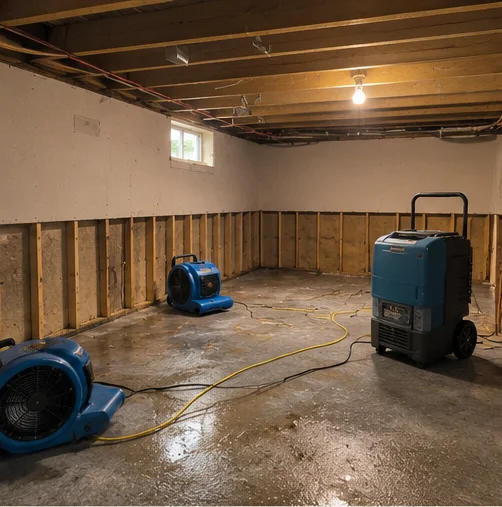
Usually saved
- Concrete floor and walls
- Framing lumber
- Solid wood doors
- Metal and plastic items

By Ashburn Resto · October 5, 2026
The room-by-room process is on our flooded basement cleanup page. Older cellars like the ones described on our Leesburg water damage page follow different rules.
The water category and the clock decide most of it. Clean water from a supply line is far kinder to materials than groundwater or sewage. And water that has been in place for a day is easier to deal with than water that has been in place for three.
Ask yourself where the water came from and how long it has been there. Both answers matter on the phone.
Pad is the first to go in almost every flood. It is foam that holds water and dries slowly. Carpet fibers dry better. With clean water and fast action, carpet can be extracted, dried and put back over new pad. With groundwater and a delay, it is often replaced. With sewage, it is always replaced.
Basement carpet is often glued or stretched on tack strip over concrete. The slab underneath stays wet longer than the carpet does, so we check it before the carpet goes back.
Drywall acts like a wick. Water climbs it a few inches above the waterline, and the paper face feeds mold. A clean cut a few inches above the highest wicking line is the usual approach. Baseboard may be saved if it is solid wood and dried quickly, but MDF baseboard swells and usually goes.
Insulation inside the wall is the next layer. Fiberglass batts in a wall that touched groundwater are usually replaced. If the wall stayed dry above the cut line, the insulation above can stay.
LVP and engineered flooring over slab hide water. Click-lock LVP can often be lifted and reinstalled once dry. Glue-down vinyl usually cannot. Engineered wood may cup and delaminate.
The slab itself is the key. If it is wet, nothing should go back until the readings come down.
Solid wood furniture can often be dried and kept. Particleboard swells and falls apart. Upholstery that touched clean water can sometimes be cleaned, but anything that touched sewage should be discarded. Photograph items before they are moved or thrown out so you have a record.
It is tempting to throw everything out in the first hour, or to keep everything because it looks fine. Neither is a good idea. Some things look fine and are not, and some things look ruined and can be saved.
A moisture reading and a short walk-through with a pro will tell you more than the surface does. Photograph everything first, then decide with the facts.
That plan makes the conversation with your insurer easier, since it shows why each choice was made. It also makes the rebuild faster, because the crew knows where the cuts are.
Photos, papers and keepsakes are often what people worry about most. Paper that is wet but not contaminated can often be frozen to stop damage and dried later by a specialist. Do not use heat to dry it, since that can warp and stain.
Electronics that got wet should stay unplugged. A technician may be able to save a hard drive even when the case is ruined. If it is a computer, a phone or a camera, ask a repair shop before you decide.
Make a list of what was in the room before the water, with rough values. It helps your insurer and helps you decide what to replace. Do this while memory is fresh.
Every choice in a flooded basement sits against a clock. The EPA says mold can start within 24 to 48 hours, so materials that stay wet for longer than that are harder to save. We ask people to call early, even if they are not sure how bad it is.
A short visit costs far less than a second round of work after hidden mold shows up. If you can only do one thing, get the standing water out and keep air moving.
Once the room is dry, decide whether to rebuild as it was or change the layout. Raising outlets, using water-resistant trim and choosing flooring that tolerates moisture all make the next leak cheaper.
Do these upgrades while the walls are open. Adding them later means cutting finished surfaces a second time.
A backup is the cheapest way to avoid this situation, so see sump pump backup options when the power goes out. The category decides most of the save-or-toss list, so see clean, gray and black water explained.
Often with clean water. Pad is almost always replaced.
Photograph them first. Ask your adjuster before discarding anything large.
Mold can start within 24 to 48 hours on wet materials, according to the EPA.
Basement flooded and not sure what to save? Call and ask.
Call (571) 760-4517