
By Ashburn Resto · October 18, 2026
When growth is already visible, see how mold removal and remediation works. Finished basements on our Broadlands page are the usual setting.
The mold timeline
What mold needs
Mold needs three things. It needs moisture, a food source and a temperature range that most homes sit within. Basements are a good host because they are cool, closed and full of paper, wood and drywall that spores can eat.
Spores are everywhere in the air. They sit and wait. Once a surface stays wet, they start to grow, and the clock begins.
The first two days
The EPA says mold can start growing within 24 to 48 hours. In that window, the fastest thing you can do is get water out and keep air moving. Remove standing water, lift wet items and run dehumidifiers and fans.
The window is short, but it is also a window of opportunity. Water that is out and dried inside two days usually does not turn into a mold job.
What helps and what does not
Drying helps. Cleaning hard surfaces helps. Removing wet pad and drywall helps most. Spraying a product on a wet wall does not, since the wall is still wet and the mold has not been removed.
A dehumidifier that holds the room below about 50 percent relative humidity makes mold harder to start. Closed doors and cold concrete walls fight against you, so keep air moving.
Where it hides in a basement
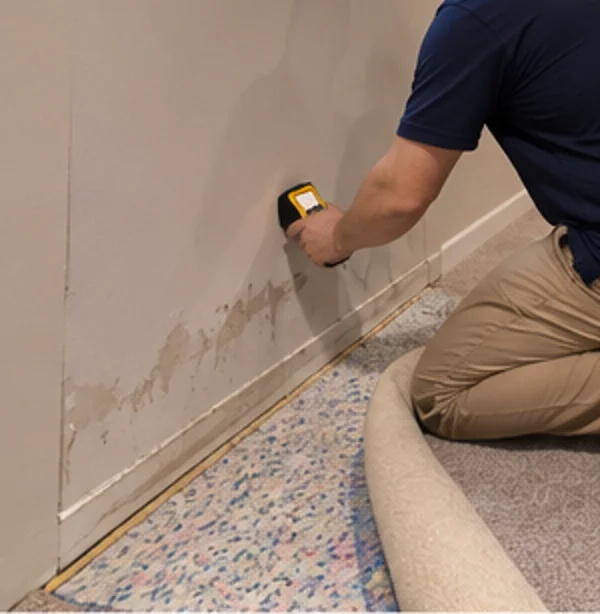
Mold starts where moisture lingers, which is often where you cannot see it. Behind baseboard, under carpet pad, inside a wall cavity and behind a washer are all common. A musty smell with no visible spots is a clue.
A moisture meter can find the damp area, and a thermal camera can show cold, wet spots. Sampling can confirm what you suspect. We recommend it when the cause is unclear.
When to call for remediation
If you can see growth over more than a small patch, or if the water was Category 3, call a pro. Remediation uses containment and HEPA filtration so spores do not spread through the house. Removing mold-damaged materials is part of it, and fixing the moisture source is essential.
See our mold removal page for how the work is done. We make no license claims, and we recommend lab analysis when testing is needed.
Humidity and the basement
A basement that stays humid can grow mold even without a flood. Cool concrete walls cause condensation in summer, and a bathroom or laundry without a fan adds moisture. A relative humidity above about 60 percent for long periods invites growth.
A simple hygrometer costs a few dollars and tells you what you have. If the number stays high, a dehumidifier sized for the room usually fixes it.
A basement humidity plan
- Run a dehumidifier and set it to hold about 50 percent.
- Empty or drain it into a floor drain.
- Keep gutters and downspouts clear and pointed away from the house.
- Check window wells for debris.
- Look for slow leaks behind the washer and under sinks.
- Keep stored items off the floor and a few inches from the walls.
If you already see mold, see our mold removal page. If you only smell it, ask for a moisture check before you buy cleaners.
What testing can and cannot tell you
Air sampling compares spore counts inside to the outside air. A surface sample tells you whether a stain is actually mold. A lab reports types and amounts. A result is one piece of information, and it should be read with what the inspector saw in the room.
Testing is not always needed. If the mold is visible and the cause is clear, go straight to remediation. If you smell mold but cannot find it, or want a record before and after, testing can help.
Be wary of anyone who sells a test and a cleaning in the same breath without explaining what the result means. Ask what number would change the plan.
What to do this week
Check the basement for musty smells and damp spots. Put a hygrometer in the room and watch the number for a few days. Look at the base of walls, behind stored boxes and around the sump pit.
If the humidity stays above about 60 percent, run a dehumidifier. If you find a damp wall or floor, find the source before you clean anything. A cleaned wall that keeps getting wet will grow mold again.
Seasonal habits that help
Summer is the high-humidity season, so run the dehumidifier then and keep windows closed on muggy days. In winter, watch for condensation on cold walls and pipes. After any storm, check the sump pit and the base of the walls.
A quick monthly walk through the basement catches small problems while they are still cheap.
Keep reading
Speed is what keeps mold out of the picture, so see what can be saved in a flooded finished basement. Attic mold often starts with a winter leak, so see how ice dams cause ceiling leaks.
Quick answers
MoldCan I wipe mold with bleach?
Not on porous materials such as drywall. Removal of damaged material works better, and bleach fumes are an issue in closed rooms.
MoldIs every musty smell mold?
Not always, but a lasting musty smell usually means something is damp. A meter can find where.
InsuranceDoes insurance cover mold?
Many policies cover mold only after a covered water loss, and some limit it. General information only. Check your policy.
Basement wet for more than a day? Call and we will meter it.
Call (571) 760-4517